
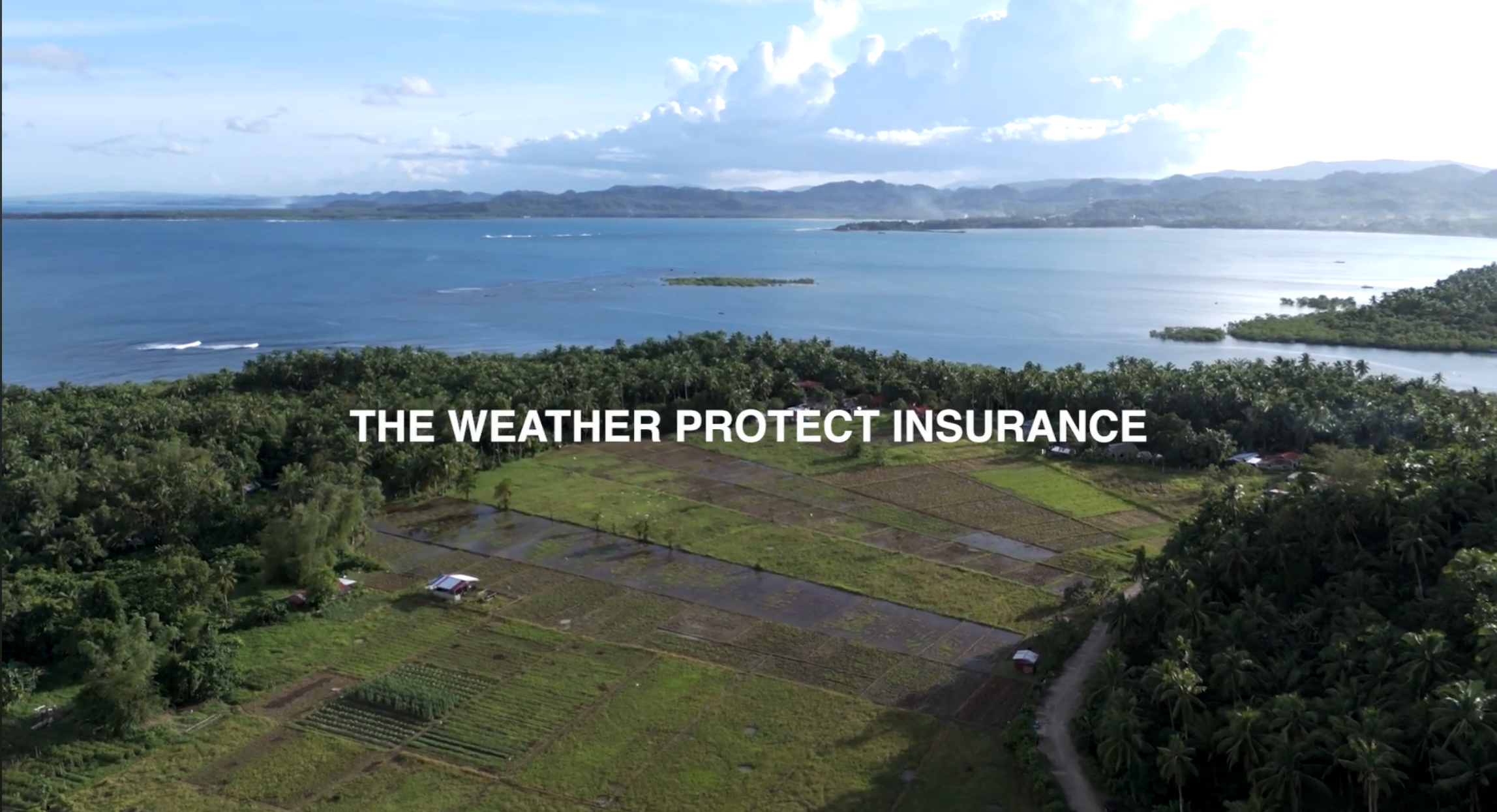
Climate change has fundamentally altered the risk landscape for Filipino farmers. Recurrent typhoons, floods, and droughts now occur with greater frequency and intensity, eroding agricultural productivity and placing sustained pressure on rural livelihoods. For smallholder farmers—many of whom operate on thin margins and depend on seasonal income—each climate shock can trigger cascading effects: crop loss, debt accumulation, delayed recovery, and, ultimately, persistent poverty.
For decades, agricultural risk management in the Philippines has relied heavily on indemnity-based crop insurance and post-disaster assistance. While these mechanisms play an important role, they have struggled to respond effectively to climate volatility. Claims verification processes are often slow and resource-intensive, payouts arrive months after losses occur, and coverage remains limited. As a result, insurance uptake among smallholders has historically remained low, leaving farmers exposed during critical recovery periods.
A Convergence of Crises
By 2020–2021, these systemic weaknesses became increasingly evident. Climate-related shocks intensified just as the COVID-19 pandemic constrained public resources, disrupted supply chains, and slowed the delivery of financial assistance. Events such as Typhoon Odette (Rai), alongside prolonged droughts in parts of Mindanao, revealed how vulnerable farmers and cooperatives were to compounded shocks. Crop losses were accompanied by disrupted cooperative loan repayment, weakened local economies, and increased reliance on informal borrowing.
This convergence of health, climate, and economic crises underscored a central policy question: how can agricultural insurance systems deliver faster, fairer, and more inclusive protection in an era of systemic risk?
Introducing Weather Protect Insurance (WPI)
In response, CLIMBS Life and General Insurance Cooperative, together with the IBISA Network and the Alliance of Bioversity International and CIAT, implemented the Weather Protect Insurance (WPI)—a cooperative-led parametric insurance solution designed to address long-standing gaps in climate risk protection.
Unlike traditional insurance, WPI operates on a parametric model, triggering payouts based on pre-defined weather thresholds—rainfall, windspeed, and drought intensity—validated through satellite data. This approach eliminates the need for post-disaster damage inspections, allowing payouts to be released within days rather than months. The result is a system that prioritizes speed, transparency, and predictability, enabling farmers to recover more quickly and plan with greater certainty.
Summary of CLIMBS Policy Advocacy_updated draft
From Ideation to Innovation: Building a Policy-Ready Model
The conceptual foundations of WPI were shaped by early global discussions on parametric insurance for vulnerable communities. Initial ideation and technical exchange were supported by the ICMIF Foundation, alongside early learning and exposure facilitated through the National Disaster Fund (NDF) under the Global Parametrics initiative, which helped ground WPI in emerging global practices on anticipatory and parametric risk financing.
Even before external scaling support, CLIMBS and its partners had established a proof of concept, demonstrating that parametric insurance could be effectively delivered through cooperative systems that farmers already trust—bridging global innovation with local institutional capacity.
Scaling Through Policy-Relevant Support
The transition from pilot to scale was enabled through support from the InsuResilience Solutions Fund (ISF) under the project “Helping Cooperatives and Agripreneurs Build Resilient and Sustainable Communities and Climate Action through Digital Solutions.” ISF support strengthened digital infrastructure, institutional capacity, and evidence generation—positioning WPI as a policy-relevant and replicable model rather than a stand-alone project.
Through ISF support, WPI was able to integrate satellite-based validation (ERA5), localize its digital policy and claims management platform, and embed transparency and accountability mechanisms aligned with regulatory requirements. This institutionalization is critical for building confidence among regulators, local governments, and development partners.
Demonstrated Results at Scale
WPI’s implementation shows that cooperative-led parametric insurance can operate at meaningful scale and deliver tangible results:
- Rainfall and windspeed coverage expanded to 324 cooperatives across 81 provinces, reaching 180,485 farmer-members, equivalent to approximately 902,425 household members, with over ₱13 million in cumulative payouts.
- Drought coverage expanded to 381 cooperatives across 903 municipalities, reaching 58,690 farmer-members, or about 293,450 household members, with more than ₱1.24 million in payouts. These payouts provided timely liquidity for replanting, household consumption, and debt servicing—reducing dependence on emergency assistance and easing pressure on cooperative balance sheets. Importantly, payouts were released based on objective triggers, reinforcing trust in the system and minimizing disputes. Findings from the Willingness-to-Pay (WTP) study further strengthen the policy case. Ninety-five percent of farmers surveyed believe parametric insurance can reduce financial losses, and willingness to pay is strongly linked to affordability, clarity of payout mechanisms, and cooperative-based delivery. These insights highlight the importance of premium support, financial education, and integrated financing strategies to scale coverage sustainably.
Demonstrating Impact on the Ground: Farmer and Cooperative Experiences under WPI
Early implementation of the Weather Protect Insurance (WPI) demonstrates how speed, predictability, and cooperative-based delivery translate into tangible recovery outcomes for farmer households and cooperative systems.
Rapid recovery after extreme weather: Joemar Flores, Mindanao
In Mindanao, Joemar Flores, a 28-year-old rice farmer and father of two, faced near-total crop loss in 2022 after heavy rains and violent winds destroyed his rice paddies. Flores had borrowed ₱30,000 from his local cooperative to purchase seedlings and fertilizer and was at risk of defaulting when the harvest failed.
Because his cooperative was covered by parametric insurance under WPI, a payout was triggered based on rainfall and windspeed thresholds—without the need for on-site damage assessment. The cooperative used the payout to partially forgive Flores’ loan and extend additional credit, enabling him to replant immediately. This intervention prevented debt escalation, stabilized household income, and protected the cooperative’s loan portfolio during the recovery period.
Strengthening cooperative emergency response: Bohol
In Bohol, payouts triggered by a severe typhoon in 2022 helped reinforce the emergency fund of the Carmen Samahang Nayan Cooperative. According to cooperative head Eufemio Abaniel, the availability of parametric insurance funds allowed the cooperative to respond immediately when farmer-members requested assistance.
Rather than waiting months for post-disaster assessments or external aid, the cooperative was able to provide timely financial support to affected members. This experience illustrates how pre-arranged insurance payouts can strengthen cooperative-level resilience, enabling faster member support and reducing reliance on delayed relief mechanisms.
Jiscel Ricaplaza-Llorente, a person with disability (PWD) and a vegetable farmer-member of the Bohol Community Multipurpose Cooperative, illustrates how WPI supports vulnerable members through cooperative-based risk protection. After a severe weather event wiped out her crops, Jiscel applied for a production loan through her cooperative to restart her livelihood. The loan was covered under WPI, providing assurance that in the event of climate-related shocks, the cooperative and the insurance mechanism would not abandon affected members.
From exclusion to inclusion: Joel Diccion
Joel Diccion, a rice farmer and fish pond operator, experienced significant losses during the same typhoon but was not yet a member of a cooperative with parametric insurance coverage. His rice fields were damaged, along with a newly constructed fish pond and a building intended for farmer training. Without access to insurance or emergency funds, Diccion was unable to rebuild.
Following this experience, he joined a cooperative specifically to access Weather Protect Insurance, convinced that future climate shocks were inevitable. His case highlights the demonstration effect of parametric insurance, where visible recovery outcomes among insured members influence broader uptake and trust among previously uninsured farmers.
In-Kind Recovery through Parametric Insurance: Randy Abalos, Ilocos Region
In Northern Luzon, Cooperatives used WPI payouts triggered by weather indices to provide in-kind agricultural support. Randy Abalos, a farmer-member of the Ilocos Consolidated Cooperative Bank (ICCB), shared that payouts were converted into essential crop protection inputs such as insecticides (including Pilarzeb and Prevathon).
For Abalos, this support was critical to protecting crops from pests and sustaining his livelihood during adverse conditions. The case demonstrates how cooperatives can strategically deploy parametric payouts, tailoring recovery assistance to localized production risks rather than relying solely on cash distribution.
Immediate household-level benefits through savings protection
Following Typhoon Egay (Doksuri) in 2023, Sonia Umani, a farmer-member of San Basilio Credit Cooperative, shared that WPI payouts were converted by her cooperative into fertilizers and insecticides, helping farmers protect crops and sustain production following climate-related disruptions. Rather than distributing cash alone, the cooperative strategically used the payouts to support farm-level recovery and reduce production risks during the succeeding planting cycle. This approach illustrates how cooperative-led parametric insurance can provide context-specific recovery support, aligned with actual agricultural conditions on the ground.
Similarly, Romulo Veliselye, a farmer-member of Sta. Cruz Savings and Development Cooperative (SACDECO), Bantay Branch, emphasized the value of efficient and timely payout distribution, noting that WPI payouts were directly credited to members’ savings accounts. This mechanism ensured immediate financial protection, preserved household savings, and enabled families to manage essential expenses during the recovery period.
Beyond Insurance: Systems Strengthening and Inclusion
WPI goes beyond risk transfer. The initiative integrates financial literacy, digital engagement, and gender-responsive strategies, recognizing that insurance uptake depends as much on understanding and trust as on product design. Innovations such as cooperative-led
education programs, virtual reality–based training tools, and the We Protect Her campaign address persistent gender gaps in access to financial services and decision-making.
The localization of WPI’s digital platform also strengthens data sovereignty, regulatory compliance, and institutional ownership within the cooperative sector. This localized infrastructure enables real-time monitoring, automated triggers, and transparent reporting, supporting both internal governance and public oversight.
Policy Lessons and the Way Forward
The Weather Protect Insurance (WPI) experience demonstrates that cooperative-led, parametric insurance can evolve from a localized innovation into a scalable and policy-relevant climate risk financing mechanism. To sustain and expand its impact, coordinated action is required across local, national, and global levels, ensuring that lessons from implementation translate into systemic resilience.
Strengthening Local Adaptive Capacity
At the local level, cooperatives and Local Government Units (LGUs) serve as frontline climate actors. WPI shows that when insurance payouts are pre-arranged and delivered through trusted cooperative institutions, recovery is faster, more inclusive, and better aligned with local needs. LGUs can strengthen adaptive capacity by integrating cooperative-led parametric insurance into Local Climate Change Action Plans (LCCAPs) and Comprehensive Development Plans (CDPs), while cooperatives continue to build capacity in claims facilitation, financial literacy, and inclusive outreach—particularly for women, smallholder farmers, and persons with disabilities (PWDs). Local co-financing of premiums through disaster and climate funds can further enhance affordability and uptake.
Institutionalizing Parametric Insurance at the National Level
At the national level, the WPI experience highlights the importance of policy coherence and institutional leadership. The Department of Finance (DOF), in coordination with the Department of Agriculture (DA), Philippine Crop Insurance Corporation (PCIC), Insurance Commission (IC), and Climate Change Commission (CCC), can institutionalize parametric insurance as a recognized risk financing instrument within the country’s agricultural risk management and climate adaptation frameworks. Priority actions include integrating parametric insurance into the National Adaptation Plan, enabling premium co-financing mechanisms, strengthening regulatory guidance for index-based products, and investing in interoperable climate data and digital claims infrastructure.
Leveraging Global Support and Knowledge Exchange
At the global level, continued collaboration with development partners and international initiatives remains critical. Support from mechanisms such as the InsuResilience Solutions Fund (ISF), Global Parametrics, and other climate finance platforms provides catalytic funding,
technical expertise, and opportunities for cross-country learning. Positioning WPI as a replicable model for cooperative-led, anticipatory climate risk financing allows the Philippines to contribute to global dialogues on climate resilience, inclusive finance, and disaster risk reduction—particularly for countries facing similar vulnerabilities.
Together, these pathways illustrate how local cooperative action, national policy reform, and global partnership can converge to move climate insurance from pilot innovation to institutionalized protection—supporting farmers, strengthening financial systems, and advancing long-term climate resilience.
Click the link to view farmer-testimonials on YouTube: https://youtu.be/0O_aqkD3Jn8?si=V0i7lW6PSajk2h4e