
The Philippines is globally recognized as one of the 17 mega biodiversity countries, known for its incredible variety of plant and animal life. It ranks fifth in the world for the number of plant species and holds 5% of the planet’s flora. In particular, its mangrove ecosystems are vital, as the country harbors at least 50% of the world’s approximately 65 mangrove species. Unfortunately, these ecosystems face serious threats from human activities such as coastal development, pollution, and deforestation, as well as natural disturbances like storms and rising sea levels. The urgent need to protect and restore mangroves has never been clearer, given their essential role in biodiversity, coastal resilience, and carbon sequestration.
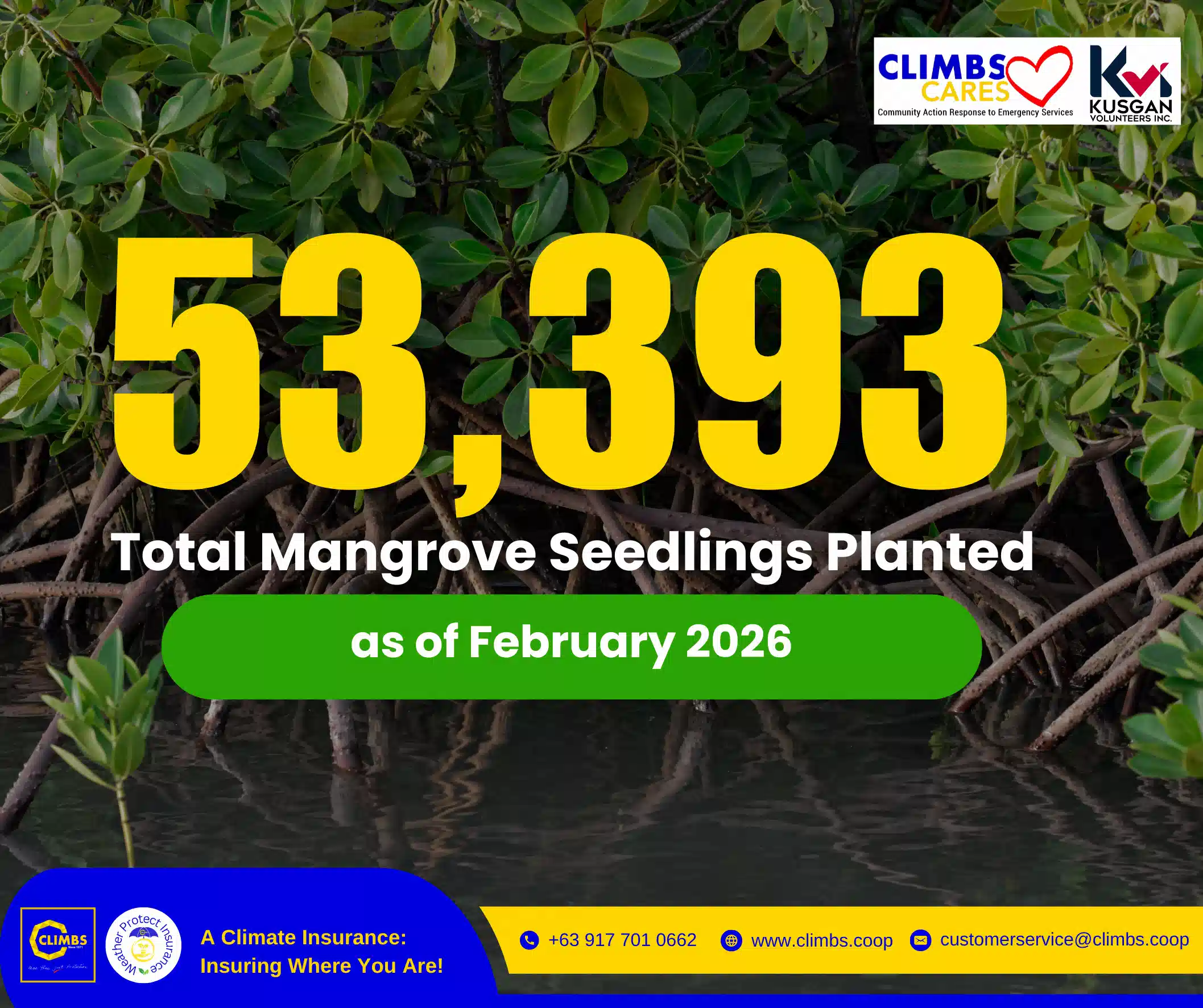
This year, CLIMBS Life and General Insurance Cooperative made a firm commitment to support mangrove restoration as part of its environmental initiatives. With the help of 25 partnered local government units (LGUs), 8 non-governmental organizations (NGOs), and 32 cooperatives, CLIMBS launched a large-scale mangrove planting drive. In January 2026, 10,200 mangroves were planted across multiple coastal areas, laying a strong foundation for the initiative. Building on that success, February saw a remarkable increase, with 43,193 mangroves successfully planted through coordinated efforts. To date, the planting efforts have covered an estimated 68.56 hectares of coastal land, demonstrating the power of cooperation and shared responsibility in preserving and enhancing the country’s natural ecosystems.
Looking ahead, CLIMBS remains deeply committed to sustaining and expanding these efforts throughout the year. By continuing to engage with our partners and the communities we serve, we aim to significantly contribute to the restoration of mangrove forests and the protection of coastal habitats. Mangroves not only serve as natural barriers against storm surges and erosion but also provide critical habitats for marine life and support livelihoods for coastal communities. Together, we can make a meaningful and lasting impact on the environment while fostering greater climate resilience. Stay connected with us for more updates as we move forward in creating a greener, more sustainable future for the Philippines.